How You’re Accidentally Making Your Dog More Fearful or Aggressive
How You’re Accidentally Making Your Dog More Fearful or Aggressive
Prefer listening? This blog post is also available as a podcast episode on the USA Dog Behavior Podcast.
Reactive, fearful, and aggressive dogs rarely behave that way in a vacuum. In many cases, the environment around the dog, including the behavior of the owner, can unintentionally make the dog think that something is wrong.
Most dog owners mean well. They want to reassure their nervous dog when they see fear or aggression starting to appear. Ironically, some of the very things owners do to help their dog can signal the opposite message: something is wrong, and you should be worried.
Understanding how our behavior influences our dog’s emotional state is one of the most powerful steps toward improving fearful or aggressive behavior.
The Problem With “Reassuring” a Fearful Dog
A common scene plays out like this: a dog sees a stranger approaching and stiffens their body, indicating the dog is uneasy. The owner immediately says things like:
“It’s okay… he’s nice… you’re fine.”
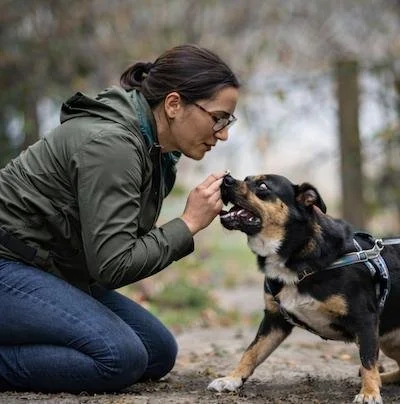
The intention is to calm the dog. But dogs don’t process language the way we do. They aren’t evaluating the logical meaning of the sentence. Instead, they are reading the owner’s tone, body language, timing, and patterns.
If the owner suddenly changes their voice, tightens the leash, or focuses intensely on the dog, the dog may interpret that shift as confirmation that something concerning is happening.
This is one of the reasons I’ve written about commands and phrases owners use that often make things worse rather than better (e.g., “leave it,” “look at me,” “it’s okay”) when their dog is stressed. Many of these cues are delivered at the exact moment the dog is already unsure about the situation. To the dog, that change in behavior from the owner becomes information. The dog thinks that something might be wrong.
Dogs Are Experts at Reading Us
Dogs are extremely good at detecting subtle changes in human behavior. Research and observation consistently show that dogs pick up on:
shifts in posture
tension in movement
changes in vocal tone
differences in pacing or breathing

When owners become anxious, dogs frequently notice the change immediately. This is why owner anxiety can unintentionally fuel a dog’s fear response. When we brace for a problem, our body language often signals tension. Dogs, who rely heavily on reading those cues, may interpret that tension as confirmation that the environment is, in fact, unsafe.
Over time, this pattern can teach the dog when to become worried.
When Owners Predict the Threat
Many reactive dogs learn a very specific pattern:
Owner spots another dog or person on a walk
Owner tightens the leash, changes posture, slows down
Owner starts talking to the dog in a concerned tone
The dog becomes reactive
After enough repetitions (i.e., learning reps), the dog learns that when their owner does certain things, something bad is about to happen. The owner’s behavior itself becomes a cue that something threatening is in the dog’s immediate future.
[This article is original content created by USA Dog Behavior (https://www.USADogBehavior.com) and is intended for our readers.]
This is one of the most overlooked aspects of behavior problems in dogs. Owners unintentionally create a chain of signals (e.g., leash movement, speed changes, talking to the dog) that predict danger. The dog is not simply reacting to the outside world; they’re additionally reacting to the information their handler is giving them.
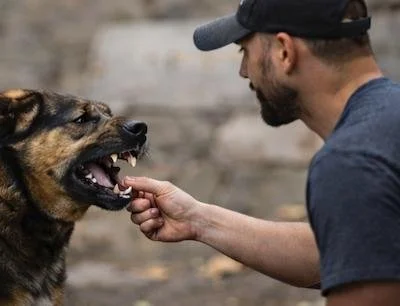
What Helps Instead
The goal is not to ignore your dog or suppress their feelings. Instead, it’s to reduce the dog owner’s signals that unintentionally confirm the dog’s concern. Helpful approaches include:
Maintaining neutral, predictable behavior when potential triggers appear
Avoiding sudden changes in voice or body language that signal concern
Practicing structured desensitization and counterconditioning exercises
Focusing on calm, consistent handler behavior
Dogs benefit enormously from predictability. When the handler remains steady and composed, the dog receives a very different message about the situation.
Wrap-Up
Many owners working with fearful or aggressive dogs are doing their best to help, but without realizing it, their behavior can sometimes cue the very reactions they’re trying to prevent.
Dogs are constantly reading our body language, tone, and emotional state. When we change those signals at the moment a trigger appears, we may unintentionally confirm the dog’s suspicion that something is wrong.
The good news is that once owners understand how these cues work, they can begin to change how they interact with their dog around triggers. And when that happens, the dog often begins to see the world very differently.
Prefer listening? This blog post is also available as a podcast episode on the USA Dog Behavior Podcast.
© 2026 Scott Sheaffer. All rights reserved. Original content. Reproduction prohibited.