The 6 Most Misunderstood and Frightening Forms of Dog Aggression
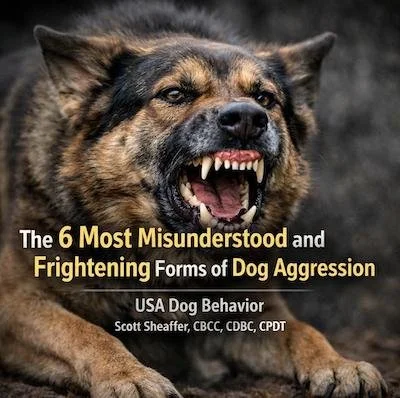
Misunderstood Forms of Dog Aggression
Prefer listening? This blog post is also available as a podcast episode on the USA Dog Behavior Podcast.
Aggression in dogs is one of the most misunderstood behavior problems I encounter. Most people think aggression always looks like growling, snapping, or biting over food or toys. But there are forms of aggression that appear suddenly, unpredictably, and sometimes without obvious warning signs.
These unusual types of aggression can be especially frightening because they challenge what we think we know about dogs and safety. Understanding them is the first step toward preventing injury and getting proper help.
Here are six of the most unusual and concerning types of dog aggression.
1. Idiopathic Aggression (Rage Syndrome)
Idiopathic aggression refers to sudden, intense attacks that appear to come from nowhere and end just as abruptly. The dog may look confused or disoriented afterward.
This form of aggression is quite rare but very serious. I’ve only worked with a small number of these cases; they can become very violent. It’s associated with neurological conditions and seizure-like activity (partial seizures) rather than typical behavioral triggers.
Key features:
No clear warning signals
Sudden violent outburst with confused and lethargic behavior afterwards
Dog often seems “not themselves.”
Medical evaluation is critical.
This is not a training problem. It requires neurological assessment before any behavior plan can be considered. Medications can help, but there are serious issues to consider when using medications.
2. Conflict Aggression
Conflict aggression occurs when a dog feels torn between two emotional states, such as wanting affection, but also feeling fearful or threatened.
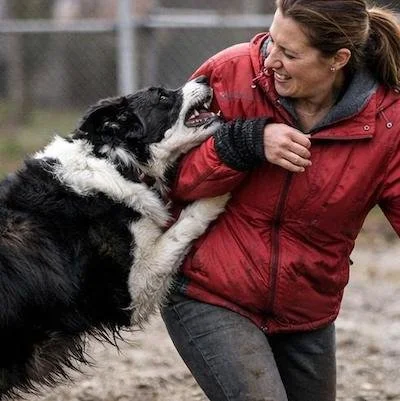
For example, a dog may approach for petting but then bite when touched. This is often misinterpreted as unpredictability when it is actually emotional overload.
Common signs:
Stiff posture
Lip licking or yawning
Turning the head away
Growling when already engaged
Dogs showing conflict aggression need careful observation and professional behavior modification, not punishment.
3. Impulsive Aggression
Impulsive aggression happens when a dog reacts without thinking. There is little or no buildup, and the response is fast and explosive.
These dogs often struggle with emotional regulation and frustration tolerance.
Triggers may include:
Sudden movement
Overstimulation
Barrier frustration
High-arousal environments
This type of aggression is frequently mistaken for “dominance” when it is actually poor impulse control.
[This article is original content created by USA Dog Behavior (https://www.USADogBehavior.com) and is intended for our readers.]
4. Redirected Aggression
Redirected aggression occurs when a dog cannot reach the true target of its arousal and lashes out at whoever is closest.
A classic example: two dogs barking at a fence, and one suddenly bites the other or a human who intervenes.
High-risk moments include:
Breaking up dog fights (I see this very frequently in my practice.)
Grabbing a highly aroused dog
Interrupting barrier aggression
This is one of the most common ways owners are bitten, often unintentionally.
5. Sleep Startle Reflex (Nightmare Aggression)
Some dogs react aggressively when awakened suddenly from sleep. This is especially common in dogs with trauma histories or anxiety disorders.
The dog may snap or bite before fully realizing where they are.
Warning signs:
Startling awake
Growling or snapping upon touch
Disorientation
Fear-based response
Management is essential: never startle any sleeping dog and teach children to respect a dog’s sleeping space.
6. Predatory Aggression Toward Humans
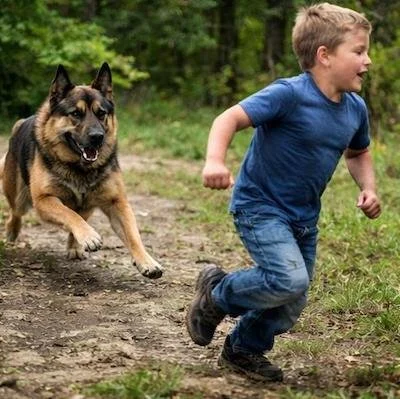
Predatory aggression toward humans is rare but extremely dangerous. It lacks the emotional warning signals of fear-based aggression. It is a pathological behavior in pet dogs.
The dog may stalk, chase, or grab in silence, often triggered by:
Running
High-pitched noises
Small children
Sudden movement
This is not anger; it is instinctive prey drive misdirected toward people.
This type of behavior requires immediate professional evaluation and often difficult safety decisions. If this behavior is repeated and is correctly diagnosed as human-directed predatory behavior, euthanasia would normally be recommended.
Final Thoughts
Not all aggression is the same. Treating every aggressive dog as “mean” or “dominant” can make the problem worse and more dangerous.
My opinion: The most important takeaway is this: if aggression seems sudden, confusing, or out of character, do not try to handle it alone. These cases can require both medical and behavioral expertise.
Early intervention saves relationships, prevents injuries, and gives dogs the best chance for stability and safety.
If your dog is showing any of these behaviors, seek help from a qualified behavior professional who understands both science and safety.
Prefer listening? This blog post is also available as a podcast episode on the USA Dog Behavior Podcast.
© 2026 Scott Sheaffer. All rights reserved. Original content. Reproduction prohibited.