Why Dogs Become Aggressive
Prefer listening? This post is also available as an episode on the USA Dog Behavior Podcast—don't forget to subscribe while you're there if you haven't already.
“All aggressive dogs are reactive, but not all reactive dogs are aggressive.”
After working with thousands of dogs and their owners, I’ve learned this: most aggression isn’t about a bad dog. It’s about a dog trying to solve a problem the only way it knows how.
That changes how we look at everything in dog aggression—growling, barking, lunging, even biting.
Aggression is one of the most misunderstood behaviors in dogs. It is also one of the most emotionally charged. When a dog growls, lunges, snaps, or bites, people often jump to conclusions: “He’s mean.” “She’s dominant.” “He’s protecting me.” “She just needs more training.”
Those explanations sound simple, but they are usually incomplete.
Aggression is not a personality type. It is behavior. More specifically, it is communication. A dog who behaves aggressively is usually trying to make something happen: increase distance, protect something valuable, stop discomfort, escape pressure, or regain a sense of control.
That is why the question should not be, “How do I stop the aggression?” At least not at first. The better question is, “Why does this dog feel the need to use aggression?”
Aggression Is Often Defensive, Even When It Looks Offensive
Many aggressive displays look bold and confident. Barking, lunging, hard staring, snapping, and charging can look like the dog is “going after” someone. But in many cases, the dog is not trying to start a fight. The dog is trying to prevent one.
A fearful dog may learn that big, dramatic behavior works. If barking and lunging make the stranger back away, the dog remembers that. If growling makes another dog leave, the behavior has been reinforced. From the dog’s point of view, aggression solved a problem.
This is one reason aggression can become stronger over time. The dog is not being stubborn. The dog is practicing a strategy that has worked. The behavior reinforces the behavior.
Reactivity and Aggression Are Related, But Not Identical
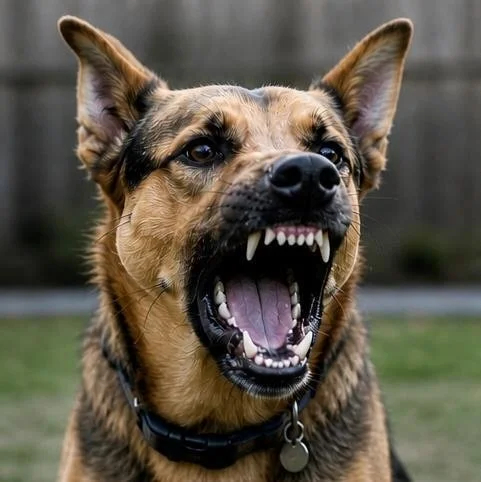
“Reactivity” is a broad term; it’s a term that has become almost meaningless in the world of dog behavior. It simply means the dog is overreacting to something in the environment (e.g., strangers, other dogs, certain sounds, motion, etc.). That reaction may include barking, lunging, whining, hiding, freezing, pulling away, or trying to escape.
Aggression is but one possible expression of reactivity. A dog can be reactive without being aggressive, and aggressive dogs normally show aggression only in very specific situations.
This distinction matters because labels shape treatment. If we call every reactive dog “aggressive,” we may overstate the risk. If we call every aggressive display “just reactivity,” we may understate the seriousness. Good behavior work starts with accurate observation.
Reactive dogs are overresponding to a trigger, whether through avoidance, freezing, or aggression, for example. All aggressive dogs are reactive, but not all reactive dogs are aggressive.
[This article is original content created by USA Dog Behavior (https://www.USADogBehavior.com) and is intended for our readers.]
Common Reasons Dogs Become Aggressive
1. Fear and Anxiety
This is one of the most common roots of aggression. A dog who feels threatened may use aggression to create distance. The trigger might be a person, another dog, a child, a visitor, a strange object, a loud sound, or a situation the dog does not understand.
The important point is this: the trigger does not have to be truly dangerous. It only has to feel dangerous to the dog.
2. Pain or Medical Problems
Pain can dramatically lower a dog’s tolerance. A dog with arthritis, dental pain, ear infections, gastrointestinal discomfort, neurological issues, or other medical problems may become irritable or defensive.
This is especially important when aggression appears suddenly or worsens without an obvious environmental change. In those cases, a veterinary exam is not optional. It is part of responsible behavior assessment.
3. Resource Guarding
Some dogs guard food, toys, resting places, bones, stolen objects, doorways, or even people. Resource guarding is rooted in the fear of losing access to something valuable.
Punishing guarding often makes it worse because it confirms the dog’s concern: “When people approach, bad things happen.” The proper treatment for this is 180-degrees apart from what most dog owners instinctively do.
4. Frustration
Frustration can turn into aggression, especially on leash or behind barriers. A dog who cannot get to another dog, person, squirrel, or exciting stimulus may escalate from pulling and whining into barking, lunging, or biting.
This is one reason leash reactivity can look so intense. The leash does not cause the underlying emotion, but it can intensify it. The dog is frustrated in their attempt to get to what they want to get to.
5. Genetics and Early Development
Genetics matter. Early socialization matters. Prenatal stress, litter environment, breed tendencies, early handling, and life experiences can all influence how a dog responds to stress.
This does not mean a dog is doomed. It means some dogs start life with a more sensitive nervous system, lower resilience, or a stronger tendency toward reactive behavior.
6. Learning History
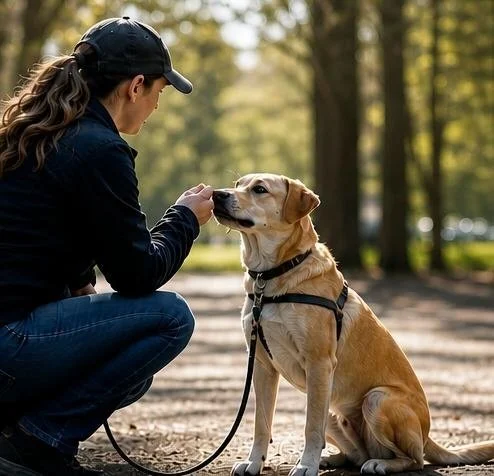
Dogs repeat behavior that works. If growling gets space, growling becomes more likely. If snapping stops handling, snapping becomes more likely. If lunging makes another dog go away, lunging becomes more likely.
This is not manipulation. It is simply learning.
Aggression Usually Has Warning Signs
Most dogs do not “bite out of nowhere.” More often, the early warnings were missed, misunderstood, or punished.
Common warning signs may include stiffening, freezing, turning away, lip licking, yawning, whale eye, growling, hard staring, pinned ears, a closed mouth, or sudden stillness.
Growling is especially important. Growling is not the problem. Growling is information. When owners punish the growl without changing the underlying emotion, they may remove the warning while leaving the risk in place. This punishment for aggressive displays can make the underlying root cause for the aggression worse over time.
When dogs start to inhibit these early warning signs, it’s called masking. And if this is allowed to fester long enough, dogs can “bite out of nowhere.”
What Owners Should Do
If your dog is showing aggression, the first step is not obedience training. The first step is understanding.
That means:
Identify patterns.
Learn the dog’s body language.
Manage the environment to prevent rehearsal.
Rule out medical issues when appropriate.
Avoid punishment-based responses that increase fear or suppress warnings.
Get qualified professional help early.
The goal is not to “win” against the dog. I’m saying that again; the goal is not to “win” against the dog. The goal is to change the dog’s emotional response and teach safer, more appropriate behavior. In other words, address the root cause of the aggression.
Wrap-Up
Aggression is serious, but it is not mysterious.
Dogs become aggressive for reasons: fear, anxiety, pain, frustration, guarding, genetics, early experience, and learning history. When we stop viewing aggression as defiance and start viewing it as communication, we can make better decisions, reduce risk, and help dogs live safer, calmer lives.
Prefer listening? This post is also available as an episode on the USA Dog Behavior Podcast—don't forget to subscribe while you're there if you haven't already.
© 2026 Scott Sheaffer. All rights reserved. Original content. Reproduction prohibited.