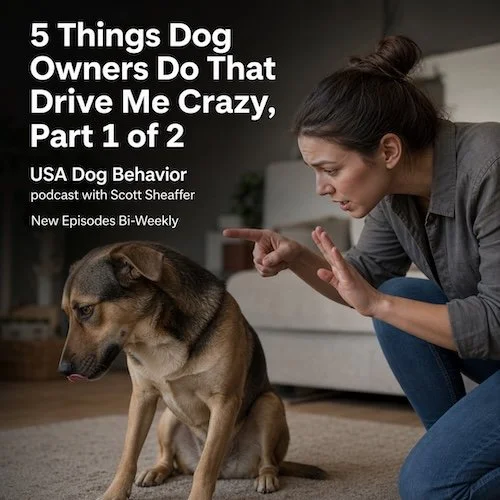
5 Things Dog Owners Do That Drive Me Crazy, Part 1 of 2
Prefer listening? This post is also available as an episode on the USA Dog Behavior Podcast—don't forget to subscribe while you're there if you haven't already.
This is Part 1 of a two-part series about practices in the dog world that drive me crazy. In the next installment, I’ll turn my attention to “5 Things Dog Trainers Do That Drive Me Crazy.”
I love dogs, and I know most owners are doing the best they can. But after years of working with dogs and their people, I keep seeing a few habits that make life harder for everyone. They confuse dogs, increase stress, and sometimes make behavior problems worse.
Here are the first five things dog owners do that drive me crazy.
1. Giving Their Dog Nonstop Commands
Sit. Sit. Sit. Stay. No. Come. Leave it. Sit!
Some owners give their dogs a new command every two seconds. The dog is already confused or stressed, so the owner responds by talking faster, getting louder, and repeating everything with more intensity. Sometimes this owner generated conversation gets kind of, well, “Hitleresque” if I’m being honest. That doesn't create clarity. It creates noise.
Give your dog a moment to process what you said and respond. If your dog doesn't comply, ask whether the cue has been taught clearly in that environment and around that level of distraction. A dog who can sit in the kitchen may not be able to do it beside a barking dog on a sidewalk.
Use one clear cue, allow time for a response, and reinforce success. Just as important, teach your dog what to do without constant direction. Dogs need opportunities to make good choices, settle on their own, sniff, explore, and simply breathe.
2. Feeling the Need to Be the “Alpha”
The alpha idea refuses to disappear. It was heavily popularized by fictional made-for-television dog training in past years, but it isn't a useful way to understand your relationship with your dog.
Your dog doesn't think you're a wolf. Your dog isn't plotting to control the household, take over your bank accounts, or prove who's boss. Most unwanted behavior is better explained by fear, anxiety, frustration, reinforcement history, unmet needs, or a dog who simply hasn't learned what to do instead.
You don't need to dominate your dog. You need to be clear, consistent, and safe. Teach the behavior you want, prevent rehearsal of the behavior you don't want, and make good choices worthwhile for your dog. Your dog is trying to function in a human household and, in most cases, wants to get along with you. Let them.
3. Using Shock Collars and Prong Collars
Shock collars are often politely called e-collars by manufacturers of these collars. Prong collars are sometimes politely called pinch collars. Softer names don't change how these tools work. They rely on discomfort or pain to change behavior. The problem isn't just the pain. It's what the dog may learn from it.
Imagine a dog who barks whenever another dog appears (this is a common behavior problem and is called dog reactivity). When this happens, the owner activates a shock collar or delivers a strong yank on the leash so that the prong-collar digs into the dog’s neck. The owner thinks, “Now my dog knows barking is wrong.” The dog is actually much more likely to learn, “When other dogs appear, my neck hurts.” Now the sight of another dog predicts pain to the dog, almost always making fear, anxiety, and aggression worse.
Research has also found that reward-focused training can be more effective than electronic-collar training without the same welfare risks. Pain is not necessary to teach a dog. Dog owners always need to look for a humane plan that identifies the reason for the behavior, changes the dog's emotional response when needed, and teaches a safer replacement behavior.
This article is original content created by USA Dog Behavior (https://www.USADogBehavior.com) and is intended for our readers.]
4. Automatically Doing Whatever a Dog Trainer Says
I've had many clients tell me some version of, “My trainer said to punish my dog every time he growls, and punish him harder if he keeps doing it. But his behavior is getting worse, and this feels wrong.” Dog owners should pay attention to that feeling.
You know your dog better than anyone on the planet. You live with your dog every day. If a method frightens your dog, makes you uncomfortable, damages your trust, or makes the behavior worse, stop and ask questions.
Growling is communication. Punishing it may suppress the warning without changing the fear or discomfort underneath it—and punishing growling frequently makes aggression worse. That can leave you with a dog who still feels threatened but provides less warning before escalating.
Dog training is an unregulated field in the United States. A business card and a quick WordPress or Wix website can make anyone look qualified. Check education, credentials, methods, and experience with your dog's specific issue. For fear, anxiety, or aggression, look for a credentialed behavior professional.
5. Taking Advice From People Who Aren't Qualified
Lots of people have owned a dog, grown up with dogs, or know someone who has one. That doesn't qualify them to give behavior advice, especially about aggression.
One client told me, “Someone said I should punish my dog every time he looks at another dog and barks so he won't be interested in them anymore.”
I asked, “What does this person do for a living?”
“She's a hairdresser.”
My response was simple: “I'll make a deal with your hairdresser. I won't tell people how to care for their hair if she'll stop giving canine behavior advice.”
Well-meaning advice can still be dangerous. Before acting on it, ask what qualifies the person, whether the recommendation is supported by evidence, and what risks it creates. Serious behavior problems deserve serious expertise.
Wrap-Up
All five of these habits come from the same basic mistake: focusing on controlling behavior before understanding it. Slow down. Give your dog clarity. Question advice that relies on fear, force, or pain. Most of all, remember that your dog isn't trying to beat you at some imaginary contest. Your dog is communicating, learning, and trying to feel safe in your world. When you understand the reason for the behavior, you're much closer to changing it.
That wraps up Part 1 of this two-part series. Next time, I’ll share “5 Things Dog Trainers Do That Drive Me Crazy.”
Prefer listening? This post is also available as an episode on the USA Dog Behavior Podcast—don't forget to subscribe while you're there if you haven't already.
© 2026 Scott Sheaffer. All rights reserved. Original content. Reproduction prohibited.