
Do Dogs Understand Death? What Science (and Experience) Really Show

Do Dogs Understand Death?
Prefer listening? This blog post is also available as a podcast episode on the USA Dog Behavior Podcast.
When a family dog dies, the question almost always comes up: Do the other dogs in the house know what happened? This is part 1 of a 2-part series. In my next blog post I’ll talk about ideas around the question of, do dogs go to heaven?
Let’s tackle today’s topic: Do dogs understand death? What do science and experience really show us? I’ve worked with many dog owners over the years who have lost dogs, and they report their surviving dogs do everything from searching behavior to depression to complete indifference. Some dogs sniff the body quietly and walk away. Others seem restless or withdrawn for days or even weeks.
What’s really going on?
The short answer is: Dogs don’t understand death the way humans do, but they absolutely recognize that something important has changed. This is the key.
Dogs Experience Change, Not “Death”
Humans understand death conceptually. Dogs don’t. They don’t grasp ideas like permanence, afterlife, or mortality. What they do understand is:
A familiar scent is suddenly gone.
A daily routine has changed.
A companion no longer responds.
Emotional states in humans have shifted.
Dogs live in a world of scent, routine, and association. When one of those disappears, it registers as a disruption. Dogs love routine and familiarity. When a dog dies, this can significantly disrupt things.
The Power of Smell
A dog’s primary sense is smell. When a dog dies, the scent changes dramatically. If the surviving dog is allowed to sniff the body, many appear calmer afterward. This isn’t closure in a human sense, but it likely helps the dog recognize that:
The companion is no longer responsive.
The smell has changed.
Something is different.
The unfamiliar is now known.
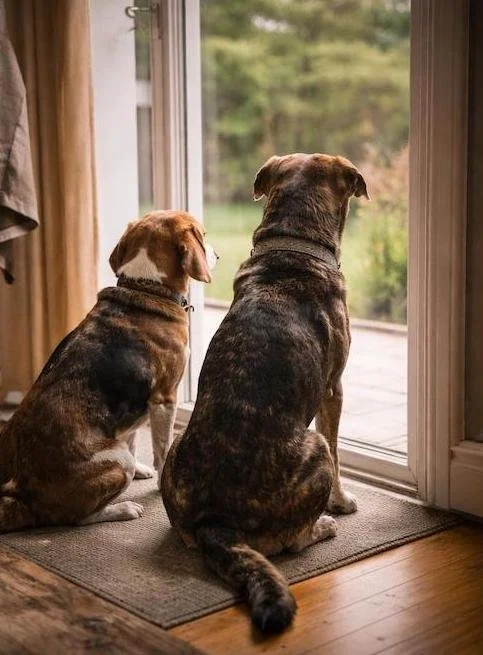
Dogs who have lost a companion may search their home for a period of time looking for their missing friend. Some think that if a dog is allowed to spend time with the deceased dog, this may reduce searching behavior later. I’m inclined to agree with this sentiment.
[This article is original content created by USA Dog Behavior (https://www.USADogBehavior.com) and is intended for our readers.]
Do Dogs Grieve?
Some dogs show behaviors that look very much like grief:
Reduced appetite
Sleeping more
Less interest in play
Vocalizing
Following the owner closely
Searching familiar places (mentioned above)
But here’s the key distinction: Dogs are responding to the loss of routine, familiarity, and companionship, not to the idea of death itself.
Dogs that were strongly bonded are more likely to show noticeable behavioral changes. Dogs that had a neutral relationship may show little reaction at all. And finally, the surviving dog might actually perk up after the loss of the other dog because they’re getting more attention from their human owners.
All of these responses are normal.
Why Some Dogs Don’t React
Not all dogs are socially bonded to housemates. Some simply co-exist. In those cases, the surviving dog may appear unaffected. This doesn’t mean the dog is “cold” or broken. It means:
The emotional attachment wasn’t strong.
The disruption to routine was minimal.

Dogs are practical creatures. If their needs are met and their environment remains stable, many move on quickly. While difficult to remember sometimes, dogs are animals. They don’t have the same emotions and beliefs that humans do surrounding death.
How Owners Should Help a Surviving Dog
The biggest mistake owners make is assuming the dog needs to be treated like a grieving human. What surviving dogs need most is:
Routine
Consistency
Calm leadership
Normal activity
Helpful steps:
Keep feeding and walking schedules the same.
Continue training and play.
Avoid over-coddling.
Watch for appetite or behavior changes.
Provide exercise and structure.
Excessive comforting can unintentionally reinforce anxious or depressed behavior. It’s called behavioral cueing, and I’m going to do a blog post on this subject in the future.
The Emotional Connection We Project
Humans naturally project our own grief onto dogs. We want them to feel what we feel. But dogs process loss differently:
They live in the present.
They don’t ruminate.
They adapt quickly when stability returns.
Understanding this helps us support them properly instead of confusing them emotionally.
A Bridge to the Bigger Question
This leads to the deeper question many people ask next: If dogs don’t understand death…Do they go to heaven?
That question isn’t scientific; it’s emotional and spiritual. And that’s exactly what we’ll explore in my very next blog post (Part 2) of this series, and it’s titled “Do Dogs Go to Heaven?”
Prefer listening? This blog post is also available as a podcast episode on the USA Dog Behavior Podcast.
© 2026 Scott Sheaffer. All rights reserved. Original content. Reproduction prohibited.